

Rupert Kinnard has been drawing diverse, compelling characters for 50 years
Among the many things artist Rupert Kinnard has learned over 50 years of cartooning is that stories have a way of finding the audiences that need them.
What began as a character scribbled into sketchbooks as a young artist in college has evolved into a landmark body of work that helped redefine representation in comics. Today, Kinnard's Brown Bomber character, widely recognized as one of the first Black gay superheroes in American comics, is the centerpiece of ‘Ooops...I Just Catharted!: Fifty Years of Cathartic Comics’, a retrospective that has introduced his work to a new generation of readers.
The book is nominated for a Will Eisner Award, which is given by Comic-Con and is sometimes described as Oscars for comics. Kinnard’s book is nominated among five other titles for Best Comics-related book for 2026. The winner will be announced July 24 during a gala at Comic-Con in San Diego.
“I feel like the book is the gift that keeps giving,” said Kinnard, who is based in the Lloyd neighborhood of Northeast Portland. “I thought I already reached the thrill that we had with the book.”
Published in April, the collection chronicles five decades of Kinnard’s comics, illustrations and social commentary, bringing together work that explored race, sexuality, disability, politics and community long before such perspectives became common in mainstream comics.
For Kinnard, the project was about honoring the communities that shaped him and inspired his art. “My initial hope with the book was to share with artists and people in the queer community, and I wanted to celebrate those communities,” he said.
The journey began decades earlier when Kinnard was attending college in Iowa and creating editorial cartoons for the student newspaper.
“The most surprising thing is where I am with having the book published,” Kinnard said. “From the beginning of drawing an editorial strip for my college newspaper and using the Brown Bomber character, I never expected the character to make it beyond the pages of my sketchbooks.”
After arriving in Portland around 1980, Kinnard’s comics began appearing in the city's gay press. Readers embraced stories that reflected experiences rarely seen in comics at the time. The Brown Bomber's coming-out story mirrored Kinnard’s own evolving identity and helped establish a connection with readers searching for representation.
“The fact that I drew the Brown Bomber as a character coming out as gay, and then leaving to Portland, and the first time it was published in Portland was in the gay press,” he said. “Even when I left Portland in the ‘80s, I thought that could have been the end of the Brown Bomber, but the strip continued due to people's interest.”
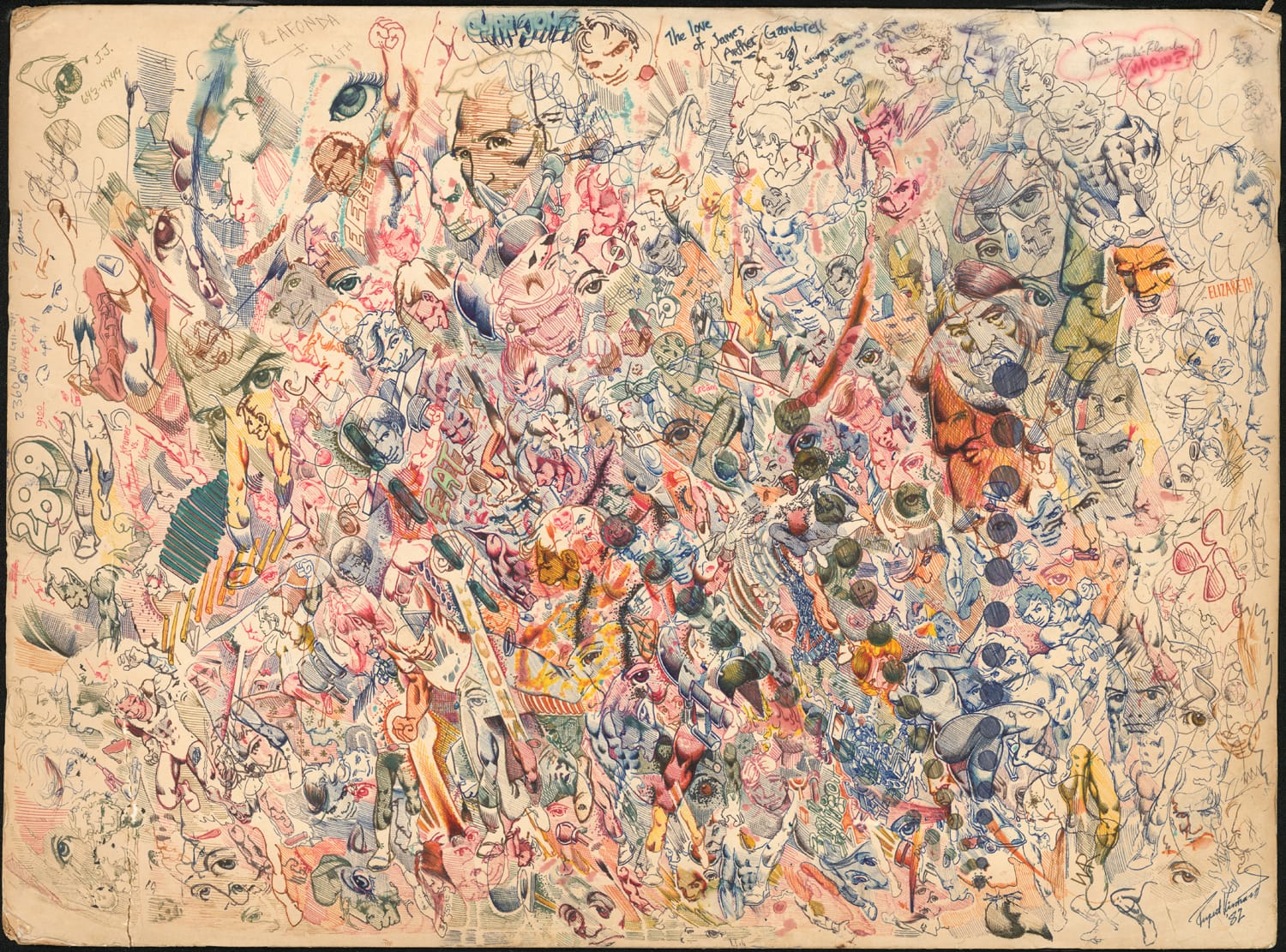
Throughout his career, Kinnard has used comics as both a creative outlet and a platform for social commentary. He said he believes some of the most powerful work emerges when artists draw directly from their own experiences.
“What I'd like to believe is that the strip encourages young people to interject parts of their lives and struggles within their creative work,” he said. “I was able to infuse my characters with parts of my personality and be able to include social commentary in my strip.”
That commitment to personal storytelling remains at the center of his next major undertaking.
Long before work began on the 50-year retrospective, Kinnard was developing what he considers his most ambitious project: The Life Capsule Project. Part-graphic memoir, part-oral history and part-photo album, the work explores his experiences as a gay Black man navigating both queer culture and broader society.
"Now that Ooops...I Just Catharted! is out there, I feel like the stage is set to buckle down and work on the Life Capsule Project for publication, and it is the project that is most representative of my life’s work,” he said.
Over the years, Kinnard’s contributions have become woven into Portland’s cultural landscape. He was among the first people to receive a commemorative brick in Pioneer Courthouse Square, designed a plaque for Darcelle's nightclub and served as one of the first board members of color on the Portland Town Council board of directors in the 1980s.
“At one point, I just realized how many examples there were of how devoted I have been to the community,” he said. “And I really love celebrating that.”
— by Michael Aviña, Star News contributor


